Wine and Food

10 Sep

Fumbling Viniferist's avatarfumblingviniferist

Beringer Winery

The enjoyment of wine can be wonderfully improved when appropriately paired with food. A pretty obvious statement, right? Most wine drinkers have for years enjoyed a glass of wine or two with dinner and many of those people don’t give a second thought to how the wine improves the food while the food improves the wine. But that magic synergy really does (or can, depending on the pairing) occur!

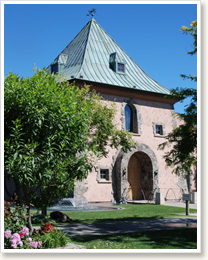
Recently I took the “Taste of Beringer” tour at Napa’s oldest continuously operating winery. Beringer has been making wines since 1876, and is one of the most awarded wineries in Napa. Sampling the ’09 Knights Valley Reserve Cab and the ’10 Modern Heritage Chardonnay was a treat, particularly after experiencing a barrel tasting in the wine caves and tunnels. As good as the samples were, when paired with small food bites, the wines really came alive.

Have you wondered why Cabs…

View original post 320 more words

Wine and Food

3 Aug

Beringer Winery

The enjoyment of wine can be wonderfully improved when appropriately paired with food. A pretty obvious statement, right? Most wine drinkers have for years enjoyed a glass of wine or two with dinner and many of those people don’t give a second thought to how the wine improves the food while the food improves the wine. But that magic synergy really does (or can, depending on the pairing) occur!

Recently I took the “Taste of Beringer” tour at Napa’s oldest continuously operating winery. Beringer has been making wines since 1876, and is one of the most awarded wineries in Napa. Sampling the ’09 Knights Valley Reserve Cab and the ’10 Modern Heritage Chardonnay was a treat, particularly after experiencing a barrel tasting in the wine caves and tunnels. As good as the samples were, when paired with small food bites, the wines really came alive.

Have you wondered why Cabs and big tannic Petite Syrahs go so well with steak? The salty taste actually makes those bitter tannins taste milder and allows the fruity layers of the wine to come through. Sour tastes will do the same – if you have ever tried high cocoa content chocolate and found it to be too bitter, try pairing it with a Zinfandel!
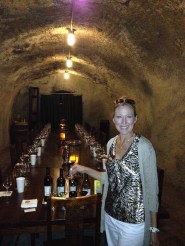
Wine tasting in the caves

Savory tastes (also known as umami) such as cooked tomatoes, onions and green veggies, as well as spicy foods will make wine taste stronger – less sweet, more bitter and tannic.The opposite relationship holds true for sweet foods. It may seem that pairing a truffle with a late harvest wine would result in too much sweetness, but the sweet foods actually make the dessert wine taste drier and more acidic. A synergistic pairing.

While it’s the end of grilling season in much of the country, I love cooking on my Big Green Egg and will pass on a couple of my favorite pairings. Not surprisingly, grilled fish benefit from a zesty, tangy white wine, like a New Zealand Sauvignon Blanc. The refreshing acidity acts like an extra lemon squeeze. However, when grilling salmon on a cedar plank, I find that the light fruitiness of a Sonoma Coast Pinot Noir goes best. Similarly, while most people immediately think of pairing white wine with poultry, when smoky grilled flavors are added to chicken, it also matches very will with medium-bodied reds like Pinot Noir and Côtes du Rhône.

It’s fun when drinking wines to swirl the wine to enhance the aromatics and take a couple of sips, and then take a bite of food – salty or sour to make the wine milder, sweet or savory to make it seem drier and more tannic. Given your individual taste in wine you can discover which pairings work best for you.

The most important “rule”: eat what you like, drink what you like!

Cheers!

Mumm’s the Word

20 May

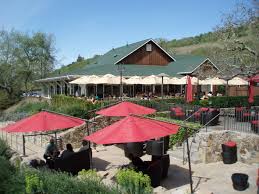
Mumm Napa terrace

I have a confession: I used to be a red wine snob.   Many years ago, after “graduating” from cheap rosé’s and sweet german whites, I discovered the interesting complexity of reds, and for years would drink a Cabernet Sauvignon with every type of food.   Fortunately, in recent years I’ve found how much more enjoyable wine can be when paired appropriately with food.  Still, I was never drawn to sparkling wines.  Until now.

Most of the wineries my wife, Arla, and I have explored in Napa and Sonoma produce big, tannic reds.  Traditionally, my kind of wines.    Our recent trip to Mumm Napa, in Rutherford, was (I thought) more for Arla than for me.  I was surprised  and delighted;  the afternoon we spent there tasting nicely aged sparkling wines (many of which are only available for purchase from the winery), browsing through the art galleries, and enjoying the amazing views of Napa Valley from the terrace, was one of the most enjoyable afternoons I’ve spent in wine country.

In 1979, the legendary French Champagne house of G.H. Mumm began a quest to find the ideal wine growing area in the U.S. for creating wine from traditional Champagne grapes – Chardonnay and Pinot Noir – and using the traditional méthode champenoise.  After several years of searching, that ideal  terroir was found and Mumm Napa was established.  Mumm Napa sources Chardonnay grapes from the cool southern Carneros region and Pinot Noir grapes along the Napa River in the middle valley.   The cool nights and hot days result in lush and tropical Chardonnay and a Pinot Noir with bright berry concentrations.

On the terrace overlooking Napa valley, Arla and I sat down to sample some wines after touring the art galleries featuring photography by Ansel Adams.  Arla selected the tasting flight of Mumm Napa Classics for $18, including Brut Prestige, Brut Rose (A 90+ rated bubbly) and Cuvee M.  These were beautiful, light and fruity wines with a light creaminess that balanced the natural acidity.

I chose the Staff Favorites (Winery Exclusives) flight for $22, which comprised the Devaux Ranch 2008, Brut Reserve and DVX 2005.  As a bonus, our server provided us a glass of their exclusive sparkling Pinot Noir.  These selections were fantastic!  The DVX 2005 had a fruit-forward nose with a subtle biscuit flavor that was unlike any sparkling wine I’ve had.  The sparkling Pinot was even better.  This wine , like a traditional Pinot Noir, is fermented with the skins before it is then processed in the traditional method for sparkling wine.   The wine was a refreshing combination of a fruity pinot noir and a sparkling rose.  I now have a new favorite for summer afternoons and barbecue!

Too Much of a Good Thing?

11 May

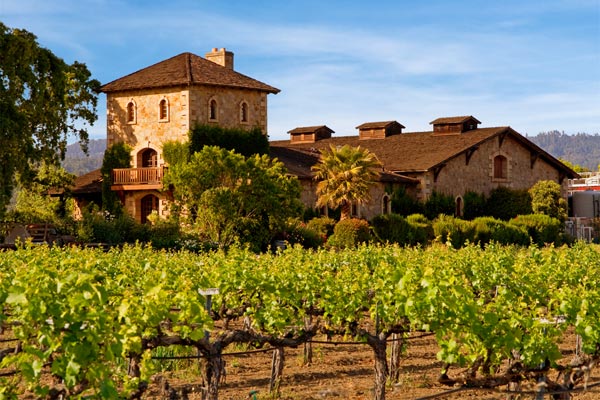
The beautiful V. Sattui stone winery, set amid venerable 250 year-old oaks in the St. Helena appellation

I will admit that I’ve never understood the concept of the spit bucket when sampling wines that cost upwards of $100 per bottle.  I mean, for a modest fee one can enjoy, compare and contrast a half dozen outstanding wines (even more if a good rapport is established with the tasting room attendant).  And who would want to waste  94-point rated wine?!

After a wonderful overnight visit to Napa, I now not only understand the concept, but the absolute importance of making full use of these decorative ewers.  Yesterday, nineteen wines were sampled between our lunch at V. Sattui winery and dinner at Celadon in downtown Napa.  While my wife expressed disappointment that I was not able to drink a full 20 glasses (maybe this was sarcasm??), I spent a good many hours regretting the 19 generous pours from our winery attendants.

We started our day at V. Sattui, which has won “Winery of the Year” and/or “Best Winery”  in Napa 7 out of the past 10 years.  Pretty impressive, and one visit makes it clear why they continue to garner these accolades.  The beautiful setting, excellent wines and fresh gourmet snacks and meals (best eaten outdoors surrounded by lush bouganvillea, palms and roses) combine to make one’s visit an unforgettable experience.  My favorites of the 7 wines tasted there:  a Madeira that dates back over 100 years (I just had to buy a bottle) and a wonderfully complex and balanced 2009 Zinfandel.

Next stop on our tasting tour was Stag’s Leap – the very winery that put California on the wine map after winning the The Paris Wine Tasting of 1976 (the Judgment of Paris) for reds.   The winery had recently run out of the 2009 Cab Sauv that was on the Reserve tasting menu, so the winemaker generously pulled some 2006 vintage bottles from the library.  Wow!  One of the best Cab’s I’ve had.

Finally, we stopped at Chimney Rock, a picturesque vineyard on Silverado Trail with a strong reputation for Cab’s.   They have some very nice blends (named Elevage) as well as award winning cab’s on the Winemaker’s Tasting Menu.  Their 2007 Signature Stag’s Leap District Cab was amazing, even better than others I’d recently tried from this acclaimed Napa vintage.

As a final note, many of Napa’s restaurant’s are as praiseworthy as the great local wines.  Throughout town, one will find farm-to-table produce and organic meats creatively prepared by top chefs.   All in all, Napa is one of our favorite weekend getaways in northern California, and for me will be even more enjoyable as I learn to sample multiple wines without the downsides of overindulgence, through the discreet use of the porcelain and stainless vases conveniently staged on the tasting bar!

September is NC Wine Month!

5 Sep

It is becoming increasingly clear that the west coast is not the only prolific producer of good American wines.  North Carolina, for example, is home to more than 90 wineries and ranks 7th in the nation for wine production.  Commonly planted vinifera grape varieties including Cabernet Sauvignon, Cabernet Franc, Merlot, Syrah, Chardonnay and Viognier, mostly grown in the piedmont and western region.

Recently I visited two well known North Carolina wineries and tasted more than a dozen different wines produced there.  Both wineries are in the beautiful mountainous region of NC, which offers spectacular hiking, fishing and kayaking (as well as some great restaurants!).  All of the wines I sampled could easily have been mistaken for very good California wines.

Banner Elk Winery is the North Carolina High Country’s first winery. What sets Banner Elk Winery apart from some others in this state is that it uses only locally grown grapes, with no imports to supplement the local crop.  Two reds that I found very drinkable and quite reasonable in price were their cabernet sauvignon and Banner Elk Red.

The cabernet is a complex and well-balanced wine with a medium body and elegance resembling an old-world Bordeaux.  The Banner Elk Red is an earthy blend of Marechal Foch, Petite Syrah, and Cabernet Franc grapes which results in a wonderfully complex and balanced mélange of flavors. This was even less expensive than the Cab, but I found it more interesting.  Definitely a wine I will buy again.

The Biltmore Estate is, believe it or not, the most visited winery in the United States!  Established in 1971 with primarily French-American hybrid grapes, the ~100 acres of vineyards now produce mainly the six varieties listed above.   My favorite white was their award winning Biltmore Sauvignon Blanc, which was crisp and refreshing with hints of peach and grapefruit.  The red that really stood out for me was the  Cardinal’s Crest Red.  Named for a ceremonial wall hanging in Biltmore’s collection, this distinctive dry red was soft and wonderfully aromatic, with cherry, black licorice and a bit of herbs. It is a bit acidic with a clean finish, which makes it a great wine for pairing with grilled meat.

All in all, these wineries really are great news for those of us wine-lovers who live in the Southeast.

A Conundrum…

20 Aug

  The BlogSpouse and I were enjoying a day in Highlands NC, and lunched at the beautiful Old Edwards Inn whose restaurant specializes in farm-to-table sustainable cuisine.   Given my order of a fresh baked rosemary flatbread pizza topped with Benton’s smoked ham, heirloom cherry tomatoes and local cheeses, and confronted with the restaurant’s extensive wine list, I was at a loss as to which wine would best pair with my lunch.

At first I was leaning towards my old standby of a Willamette Valley Pinot Noir, but then I noticed the listing for a white blend called Conundrum from the venerable Caymus Vineyards.  What a great choice that turned out to be!   The creamy texture and refreshing acidity balanced perfectly with the concentrated layers of peach and melon flavors.   To create the layered flavors that go into the Conundrum blend, Caymus combines Sauvignon Blanc grapes brought in from the Napa Valley, Muscat Canelli from the Central Coast, and Chardonnay and Viognier from Conundrum’s vineyards in Monterey County.  Apparently the exact ratio of the blend is never revealed, but it’s fun trying to guess.

This was a pairing that worked out perfectly – like a Sauvignon Blanc with fresh oysters, or Pinot Noir with cedar plank salmon.  And at about $20 a bottle, I think this wine is a bargain.  

A Great Pairing App

17 Aug

http://widget.wineanswers.com/wineanswers_widget.swf

A Rocker and Winemaker: Maynard’s Caduceus Cellars

15 Aug

Listening to the bands Tool, A Perfect Circle or Puscifer and watching the reclusive and charismatic lead singer, Maynard James Keenan, it would not occur to most people to connect him with great wine.   However, Maynard’s wine company, Caduceus Cellars, produces exceptional wines from Arizona and California grown grapes.   These wines are not easy to find in wine stores but, outside of the summer months, they can be ordered directly from Caduceus.   I was bowled over when I sampled some Caduceus reds in their Jerome Arizona cellar and tasting room.   The wines were complex, balanced and very good.

Would you buy wine from this man??

A West Point grad and former Army officer, Maynard’s music – sometimes referred to as “art rock”  is haunting and thought-provoking.  He has applied the same creative and focused thought process that has brought him artistic fame to his successful wine endeavors.  

I recommend opening a bottle of Chupacabra and enjoying it while listening to Tool!


A Super Super-Tuscan

14 Aug

In Italy in the 1970s, rebel Tuscan producers decided to use non-Italian grapes like Cabernet Sauvignon, Merlot and Syrah (Bordeaux varietals) in their wines. They were forced to carry the label vino da tavola, or “table wine,” normally meant for inexpensive, low-quality wines. These big, rich wines were nicknamed super Tuscans, and it stuck.

I recently discovered an excellent and inexpensive Super Tuscan called Crognolo. About $35, rated at 91 by Wine Spectator, the typical flavors expected of a Bordeaux come through – currant and berry, with a beautiful balance between the fruits and soft tannins. It would be interesting to compare this wine with a Bordeaux: presumably the warmer climes of Tuscany produce a richer, fuller bodied wine.

Fifty/Fifty

9 Aug

Drinking Peju Winery’s wonderful “Fifty/Fifty” Merlot-Cab Sauv blend proves how complementary these two grapes can be.   This wine pairs the elegance and lush tannins of merlot with the powerful gripping tannins of a cab, and in effect fills the palate gaps left by each variety. 

While I am certainly enjoying this wine, the price at $85 is a bit steep.   There are other, cheaper blends out there that are similar and much easier on the wallet (for example, Hogue Cellars 2007 Red Table Wine: 88 pts Best Buy, Wine Enthusiast)

As soon as I can justify it (maybe a visit from one of my sons?) I’ll open that 94 rated Peju Cabernet!